The Memphis Blues and Gospel of Robert Wilkins
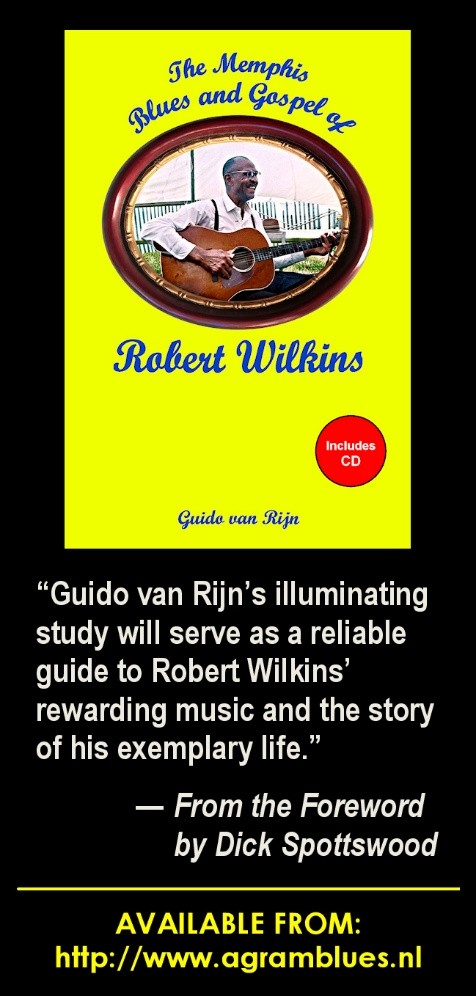
Memphis, Tennessee and its northern Mississippi environs produced and attracted an abundance of southern African-American music talent for record makers. Victor Talking Machine Company producer Ralph Peer visited Memphis regularly in 1927-30 to capture new and old music for the company’s active race and country catalogues. Robert Wilkins was one of the now celebrated performers whose music Peer preserved in 1928, but it was not until Mayo “Ink” Williams came to town in 1929 and 1930 on behalf of Brunswick Records that Wilkins’ best records were made. His stark, emotional performances vividly reflected the tragedies, frustrations and limitations of racially divided southern society, and Guido van Rijn’s illuminating study includes lengthy excerpts from interviews with Rev. Wilkins, including my own from 1964.
The Paramount 12000/13000 Series, second, revised edition. Max Vreede and Guido van Rijn
In 1971, Storyville Publications published a groundbreaking discography of the Paramount label’s famous 12000-13000 “Race” series by pioneering researcher and collector Max E. Vreede (1927-1991). It featured contemporary advertisements on the left-hand pages, while the right-hand pages listed issues (about ten to a page) in numerical order. Long sold-out, the book has become a cherished collector’s item and an indispensable tool for the serious blues and gospel music enthusiast.
The Chicago Blues of Joe and Charlie McCoy

Of all the books in this series by Guido van Rijn, this study of the lives, musical styles, and recordings of “blues brothers” Joe and Charlie McCoy has been the most problematic and difficult to bring to completion and publication. Some of the problems were simply due to the volume of material the two artists recorded, the difficulty of obtaining listenable copies of some songs, and further difficulties of understanding their lyrics, the latter especially in the case of brother Joe. For two artists who recorded prolifically, both separately and together, over a period of about a decade and a half, and who composed and/or performed on many hit records, the McCoy brothers are little mentioned by others who knew them and are generally mentioned only in passing by blues researchers. They remain unjustifiably in the shadows of blues history, while their contemporaries and collaborators, such as Bo Carter, Tommy Johnson, Ishman Bracey, the Mississippi Sheiks, Memphis Minnie, Big Bill Broonzy, Washboard Sam, Johnnie Temple, Tampa Red, and Roosevelt Sykes, shine brightly in the blues firmament.
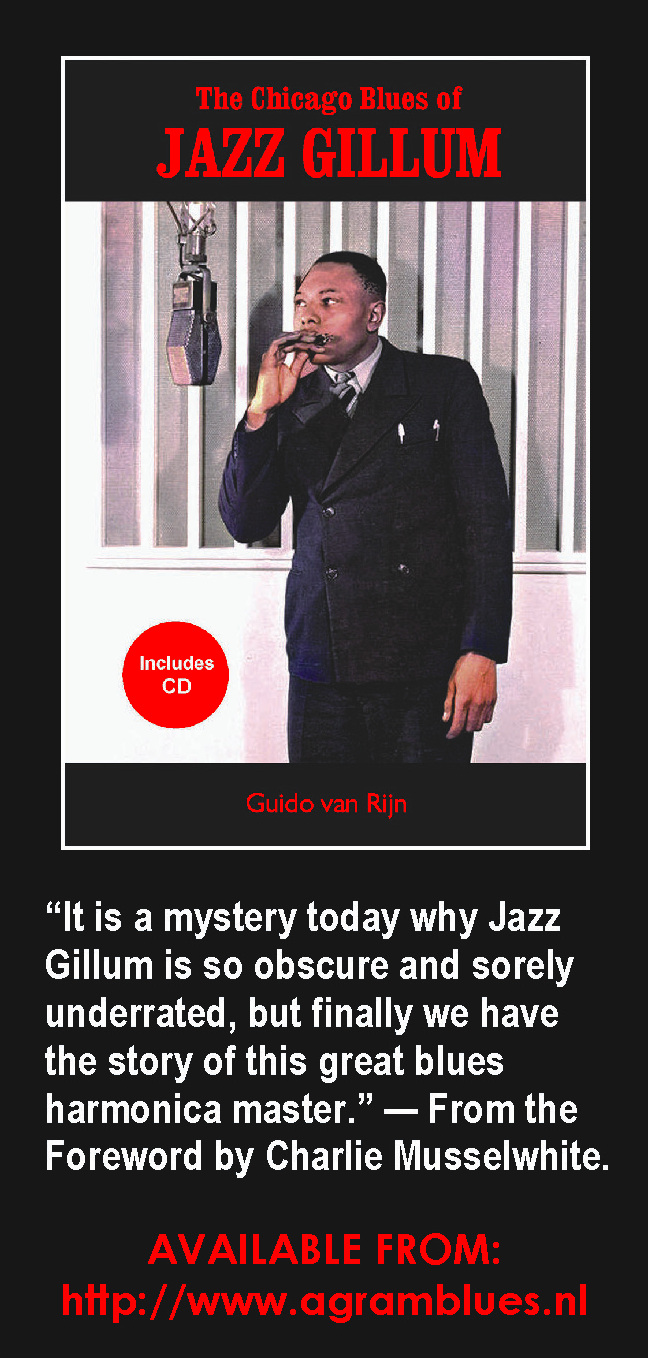
The Chicago Blues of Jazz Gillum
Although I have returned to my home state, and now live in Clarksdale, in the Mississippi Delta, I was fortunate enough to grow up in Memphis in the 40s and 50s, and to meet many of the surviving old-time country blues singers there. I moved on to Chicago as a teenager in the early 60s, when the blues scene was still fully alive, and got to know many of the greats still performing there, like Muddy, Wolf, Little Walter, Big Walter and more – lots more!
There were quite a few harp players still around back then, and Jazz Gillum was no doubt one of the greats. I could kick myself whenever I recall the chances I had to meet Gillum, but somehow I got sidetracked again and again. He was not performing, but we had mutual friends that wanted to introduce us. How was I to know he was going to be shot and killed in a Chicago alley? It was on my mind to go and meet him, but there was just so much going on all the time back then in Chicago, and I guess I just got distracted. Plus I was a teenager, and at that age one has a different perspective and time seems abundant. I was lucky enough to see, hear, and become good friends with Little Walter, Shakey Walter Horton, Jimmy Reed, Junior Wells, Good Rockin’ Charles, Little Addison, Billy Boy Arnold, Sonny Boy Williamson and more. Each one had something unique to offer.
I sure wish I could have heard Jazz Gillum, because he certainly had his own style that I loved too. For instance, his distinctive harp technique includes some remarkably effective high register playing in first position. His way of playing added so much to the history of blues harmonica. There is even hillbilly influence in a tune like “I Want You By My Side.” Some of his most notable playing is on “Key To The Highway,” both in his own version and when he backs Big Bill Broonzy.
It is a mystery that Jazz Gillum is so obscure and sorely underrated today, but finally we have the story of this great blues harmonica master. I hope this fine biography brings him the attention he so well deserves. The time and energy put in, and the great research done by author Guido van Rijn are outstanding, and I am grateful that Jazz Gillum’s story is now available. Any and all blues lovers will want this book. I highly recommend it.
Charlie Musselwhite
Read more
Hot Time Blues: On the Trail of Long-Gone Blues and Gospel Singers
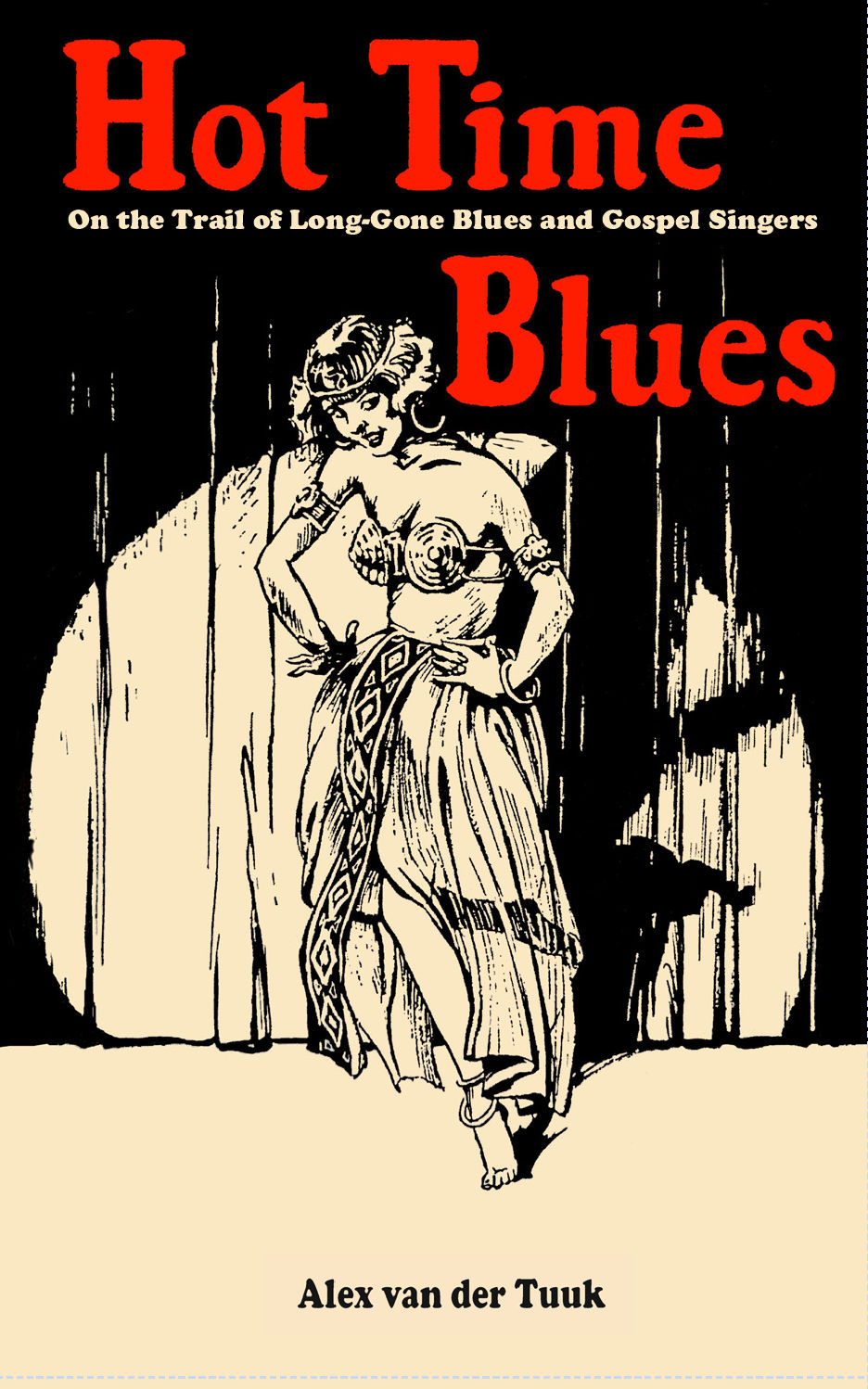
After The New Paramount Book of Blues (2017, 2nd revised edition 2023) Alex van der Tuuk has written a sequel entitled Hot Time Blues. This time light is shone on the lives of eighteen blues singers, ranging from the obscure to the famous. Alex is one of the best blues sleuths in the world and this new book will certainly be lauded as much as its predecessor. The extensive foreword was written by Dr. David Evans and the book was edited by Chris Smith.
The full colour, well-illustrated book comes as a hardback with a dust cover. Agram Blues Books hopes to publish it in August 2023.
The Chicago Blues of Washboard Sam
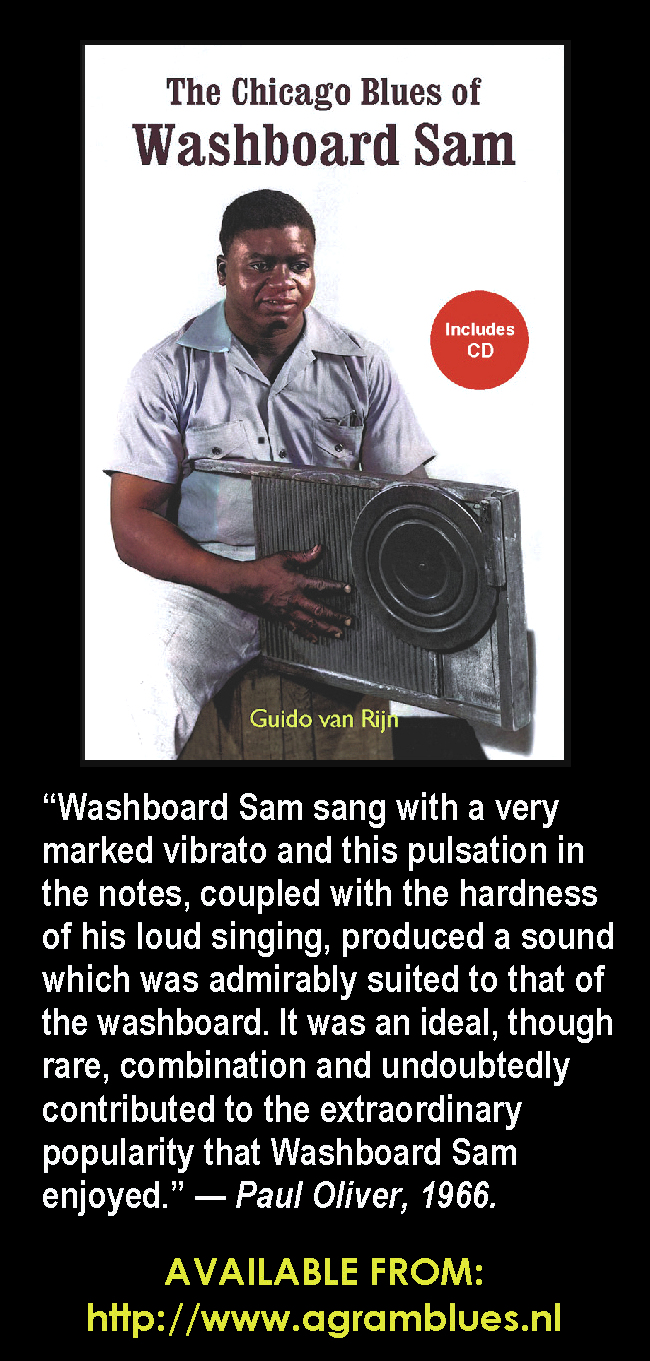 I grew up listening to my father’s jazz record collection, which my parents had brought back from a four-year job stint in the USA in the late 1950s and early 1960s.
By the age of 12 I had taught myself to play piano by ear, inspired by early blues piano and boogie woogie recordings given to me by musicians and record collectors. Among them were re-issue LPs of Washboard Sam’s music, which I instantly adored, because the playing of the accompanying pianists was especially thrilling and interesting. I also admired Washboard Sam’s talents as a “timekeeper” who could literally replace a drum set with his washboard – his music always swung!
Later, as a professional musician, I began to realize that prewar and early postwar recordings by small bands were the birthplace of today’s popular music, and that Chicago was one of its most important cradles. Hired as talent scouts, musicians like Big Bill Broonzy and Roosevelt Sykes, among others, went down south to find fresh new blues talent for producers like Lester Melrose and J. Mayo Williams, and to bring the musicians to the recording studios. Wherever uptown jazz and blues from the south came together, rhythm ’n’ blues was being played and created.
Washboard Sam’s music is exactly that – his accompanying units in Chicago and its suburbs were recruited from a rich scene of experienced city musicians who knew exactly what to do: pianists Black Bob, Josh Altheimer, Horace Malcolm, and Blind John Davis; bassists Ransom Knowling and Alfred Elkins; reedmen Arnett Nelson and Buster Bennett; guitarists Big Bill Broonzy and George Barnes – to name but a few.
Obviously self-taught, apparently with coaching from his close friend Big Bill Broonzy, Sam had a personal, unique, and instantly recognizable style: rough and rocking, with a voice not unlike an alto saxophone, he was a real blues belter. He fit perfectly, both into Bluebird’s roster of musicians, and into the sound of the so-called “Bluebird Blues” era.
Sam was one of producer Lester Melrose’s most successful artists and many of his records were very popular. Apart from his gutsy vocals and always swinging washboard accompaniment, he was also a sought-after songwriter, as the composer credits on many records indicate.
Prepare to be impressed when reading, by previously unseen pages from Sam’s personal songbook, and by the many other discoveries which have emerged from Guido van Rijn’s intensive and extensive research into a neglected but very important blues artist.
Daniel Gugolz
Read more
The Naptown Blues of Leroy Carr
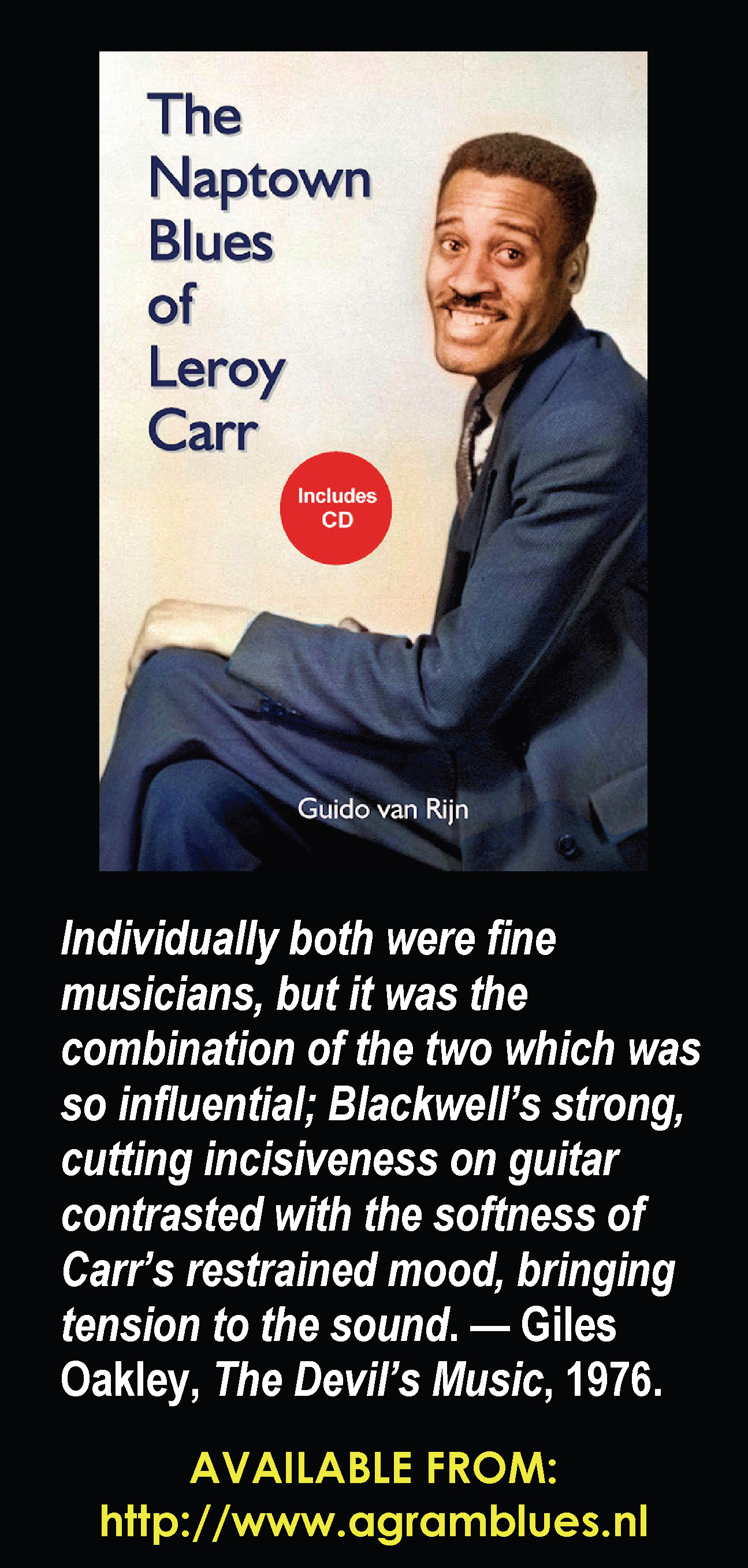
The book on Leroy Carr contains a biography, a transcription and analysis of the lyrics, a musical analysis and a chapter on Leroy’s musical influences
When “How Long – How Long Blues” was recorded in 1928 it was the first blues recording made in Indianapolis. Naptown was a hotbed of sublime pianists, but Leroy was by far the most influential. The combination of guitar and piano was notoriously difficult to balance with the recording technology of the time, but at their best, which was not seldom, Leroy Carr and Scrapper Blackwell established a perfect unity of style and purpose.
Scrapper’s fierce attack has always been recognized for its sheer power and his remarkable skills, but Carr’s technical artistry has often been underrated. The combined effect of their instruments was the ideal setting for Leroy’s highly inventive, personal, and often poetic lyrics.
The book will be accompanied by a CD selection of no fewer than twelve Walter Davis test pressings in superior sound, eight of the best-sounding 78s from the collections of Paul Swinton and Dave Williams and part of a 1959 Scrapper Blackwell interview by Theodore F. Watts.
The St. Louis Blues of Walter Davis

Walter Davis has always fascinated me because of his distressing voice, his clever, often insightful lyrics, and above all his idiosyncratic piano style. It was probably to his advantage that Davis could not read music; unfettered by rules and conventions, he developed a unique modal style which influenced many blues pianists, and continues to impress.
The book on Walter Davis contains a biography, a transcription and analysis of all his lyrics, a musical analysis and a chapter on Walter’s musical influences.
It will be accompanied by a CD including Paul Oliver’s interviews with Walter Davis and his guitarist, Henry Townsend; both sides of Bullet 328 (the only Davis 78 still unreissued); and a selection of the best-sounding Walter Davis test pressings and 78s from the collections of Paul Swinton and Dave Williams.
The Texas Blues of Smokey Hogg
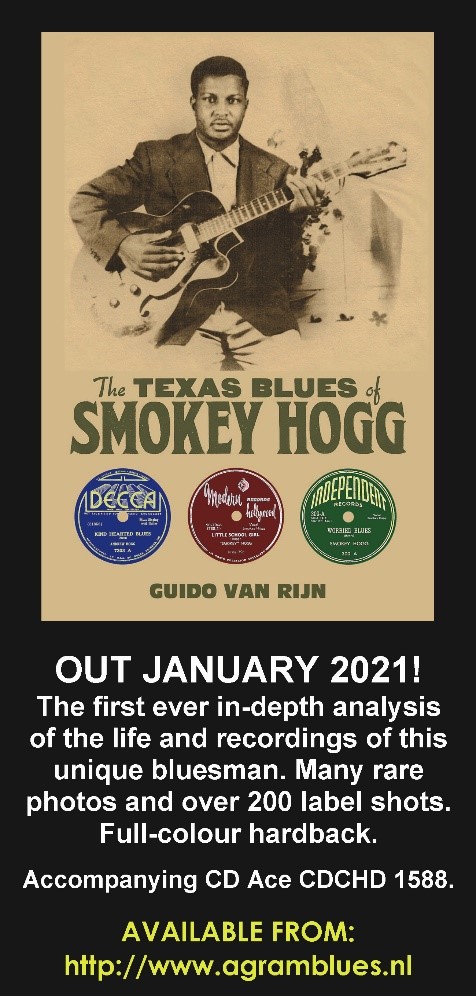
Texas blues singer, guitarist and pianist Andrew “Smokey” Hogg (1914-1960) made no fewer than 256 recordings, two in 1937 and the rest between 1947 and 1957, a decade of intensive activity which made him one of the blues’ more prolific recording artists.
Why did record producers think that phonograph owners would buy Smokey Hogg’s records, and that tavern patrons would use their nickels to select them? In this book, I have strived to establish as complete a biography of Smokey Hogg as possible, exploring the arc of his career and examining the extent to which his lyrics were inspired by events in his life.
The book is accompanied by a CD of the same tiut;le on Ace CDCHD 1588.
Paramount’s Rise and Fall
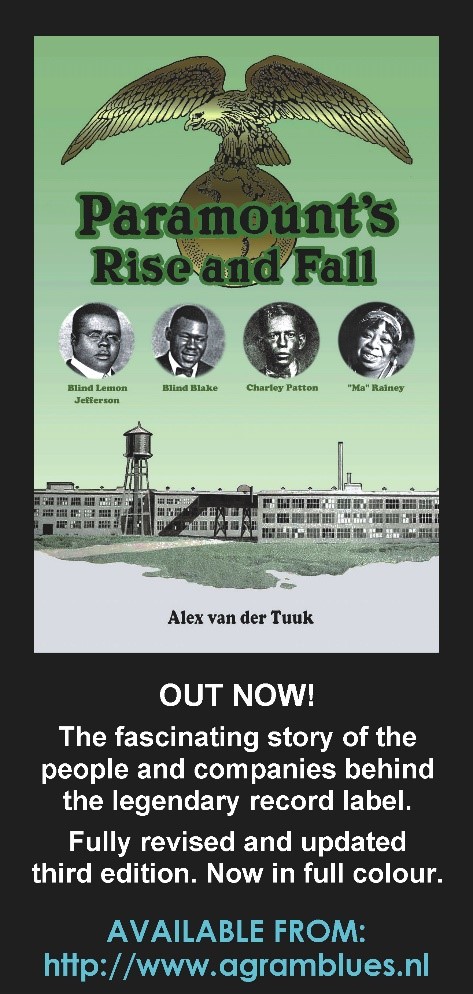
Although his focus is on Paramount’s blues releases, Van der Tuuk does give appropriate attention to the label’s gospel and jazz recording activities, as well as some of the white pop acts that cut for them, along with fascinating oddities like a five-disc album (one round per disc) documenting the famous 1927 Jack Dempsey-Gene Tunney “long count” fight at Soldier Field in Chicago. Nonetheless it’s the blues sides the aficionados usually think of when they consider the label’s legacy. It’s these records that earned the old W.C.C. factory site a plaque on the Mississippi Blues Trail and that continue to draw pilgrims to Grafton and nearby Port Washington (where Paramount’s actual home office was located) for events like the annual Paramount Blues Festival. and it‘s this history that van der Tuuk has captured and made come alive again in this modern-day masterpiece of research and documentation, which no true aficionado should be without. David Whiteis, Living Blues 267
The New Paramount Book of Blues:
Elusive Artists on Paramount Race Records

Fifty-eight biographies of Paramount blues artists with sensational new information based on years of research. Some of the artists covered by the New Paramount Book of Blues recorded prolifically during the 1920s and 1930s; others cut less than a handful of songs. Some of them recorded exclusively for Paramount; others also made records for other companies. Most of them have received less attention than the likes of Charlie Patton, Skip James and Tommy Johnson (all Paramount recording artists) or Bukka White, John Hurt and Robert Wilkins, who recorded elsewhere.
New York Recording Laboratories Matrix Series
The New York Recording Laboratories Matrix Series is the most complete and up-to-date discography of NYRL recordings produced in Chicago, Illinois and Grafton, Wisconsin. Documenting of these recordings was started half a century ago by Max Ernst Vreede of the Netherlands (1927-1991). When Vreede fell ill in 1986, Guido van Rijn helped him update the discography. In 1995, the L matrix series was published in issue 9 of Pete Whelan’s magazine, 78 Quarterly. The Paramount and Broadway matrix lists were updated by Guido van Rijn and Alex van der Tuuk in 2011. These discographies differ from earlier listings such as Vreede’s Paramount 12000/13000 Series (1971) and Laurie Wright’s OKeh Race Records 8000 Series (2001), which list the issued records in numerical order. The Agram series of Paramount and Broadway discographies lists all matrices in numerical order, making information available on issued and unissued recordings.
Vocalion 1000 & Brunswick 7000 Race Series
Until now, I have published in Agram Blues Books only books I have written myself or in co-operation with Alex van der Tuuk. For the first time, I now publish a book written by collector friends of mine, Helge Thygesen from Denmark and Russell Shor from the United States. Together they have spent years collecting 78 r.p.m. records in the Vocalion 1000 and Brunswick 7000 series. Both are “race series,” which included only recordings by African-American artists. The Brunswick-Balke-Collender company started the Vocalion 1000 series in April/May 1926, and the Brunswick 7000 in May 1927. The music was the cream of the crop of classic 1920s jazz and blues recordings. We have adopted the same style for the book as used for the Paramount discographies.
 AGRAM
AGRAM 